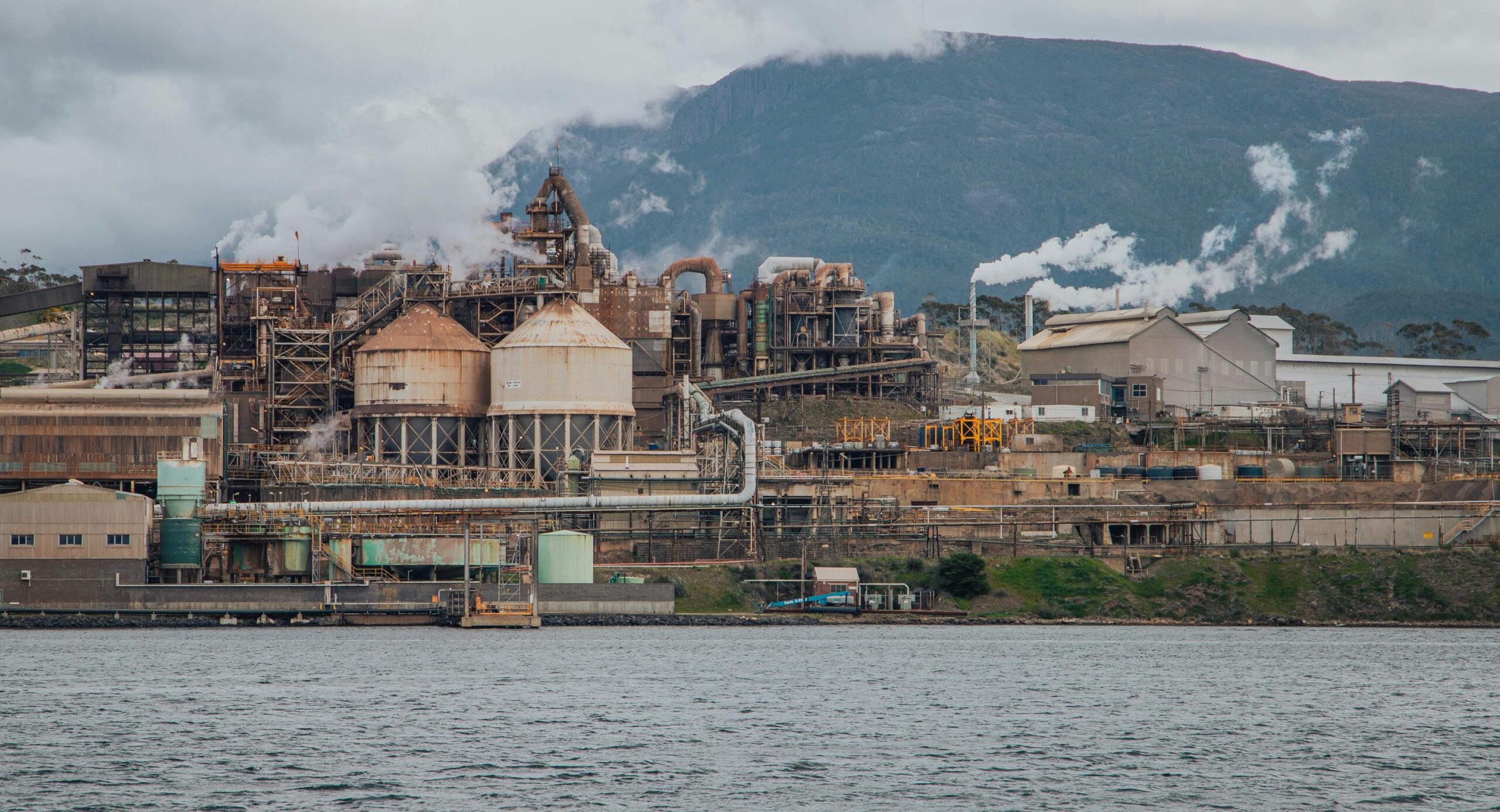
As we face unprecedented environmental challenges, understanding and measuring nature’s true value has become essential for building a sustainable future that benefits both humanity and our planet.

🌍 Why Nature’s Value Remains Hidden in Plain Sight
For centuries, human civilization has treated nature as an infinite resource, freely available for exploitation without consequence. The forests that purify our air, the oceans that regulate our climate, and the insects that pollinate our crops have traditionally been considered “free services” in economic calculations. This fundamental oversight has led to devastating environmental degradation that now threatens the very systems supporting life on Earth.
Environmental impact valuation emerges as a transformative approach to address this critical gap. By assigning tangible economic values to ecosystem services and natural capital, we can finally integrate nature into decision-making processes that shape our collective future. This isn’t about commodifying nature for profit—it’s about recognizing that ignoring environmental costs creates a distorted economic reality that encourages destruction.
The traditional GDP-focused economic model fails to account for the depletion of natural resources or the costs of pollution. A country could clearcut its entire forest cover, and this would register as economic growth rather than the catastrophic loss it represents. Environmental impact valuation provides the analytical tools to correct these dangerous blind spots.
💡 Understanding Environmental Impact Valuation: Beyond Simple Economics
Environmental impact valuation encompasses various methodologies designed to quantify the economic worth of ecosystem services and environmental changes. These approaches range from market-based pricing to sophisticated modeling techniques that estimate values for resources that never enter traditional markets.
The concept rests on recognizing that ecosystems provide measurable benefits to human wellbeing. When we value these benefits economically, we create a common language that policymakers, businesses, and communities can understand and act upon. This translation doesn’t diminish nature’s intrinsic worth—it amplifies our ability to protect it within systems dominated by economic reasoning.
Key Valuation Methodologies Transforming Environmental Economics
Several established approaches help economists and environmental scientists assign monetary values to natural assets:
- Market Price Method: Uses existing market prices for resources like timber, fish, or water to establish baseline values for ecosystem outputs.
- Replacement Cost Approach: Calculates what it would cost to replace ecosystem services with human-made alternatives, such as building water treatment facilities to replace wetland filtration.
- Hedonic Pricing: Examines how environmental factors influence property values and other market prices to extract implicit valuations.
- Travel Cost Method: Assesses recreational value by analyzing how much people spend to visit natural areas.
- Contingent Valuation: Surveys people about their willingness to pay for environmental preservation or their willingness to accept compensation for environmental losses.
- Benefit Transfer: Applies valuation estimates from studied sites to similar locations, enabling faster assessments.
Each methodology offers distinct advantages depending on the ecosystem being valued, the available data, and the specific decision-making context. Comprehensive environmental assessments often combine multiple approaches to triangulate more robust value estimates.
🌱 Real-World Applications Driving Sustainable Development
Environmental impact valuation has moved far beyond academic theory into practical applications that are reshaping how governments and businesses operate. These real-world implementations demonstrate the transformative potential of recognizing nature’s economic value.
Protecting Watersheds Through Economic Recognition
New York City’s watershed protection program stands as a landmark example of environmental valuation in action. Faced with deteriorating water quality in the 1990s, the city confronted a choice: build a massive filtration plant costing $6-8 billion, or invest in protecting the natural watershed ecosystems that had historically purified the water supply.
By valuing the watershed’s filtration services, New York chose the natural solution, investing approximately $1.5 billion in land acquisition, conservation easements, and sustainable farming practices in the Catskill watershed region. This decision saves the city over $300 million annually in treatment costs while preserving biodiversity and rural livelihoods.
Corporate Environmental Accounting Reshaping Business Strategy
Progressive corporations increasingly incorporate natural capital accounting into their operational frameworks. Companies like Puma, Kering, and Unilever have conducted comprehensive environmental profit and loss (EP&L) analyses that value their entire supply chain’s environmental impacts.
These assessments reveal hidden environmental costs often exceeding traditional profit margins. By making these impacts visible, companies can identify efficiency opportunities, reduce risks, and develop genuinely sustainable business models rather than relying on superficial green marketing.
🔍 The Hidden Economics of Ecosystem Services
Ecosystem services represent the myriad ways natural systems support human wellbeing and economic activity. Understanding and valuing these services illuminates dependencies often taken for granted until they disappear.
Pollination services provided by bees, butterflies, and other insects contribute an estimated $235-577 billion annually to global food production. Yet pollinator populations have declined dramatically due to habitat loss, pesticides, and climate change. Without economic valuation, these losses remain invisible in agricultural planning until crop yields suddenly collapse.
Coastal wetlands and mangrove forests provide storm protection worth billions of dollars by absorbing wave energy and reducing flood damage. The destruction of these natural barriers to facilitate coastal development has left communities catastrophically vulnerable to hurricanes and storm surges, as tragically demonstrated during numerous recent disasters.
Climate Regulation: Nature’s Unsung Carbon Infrastructure
Forests, oceans, and soils constitute the planet’s carbon sequestration infrastructure, absorbing approximately half of human carbon emissions annually. This service alone is valued at hundreds of billions of dollars when calculated against carbon pricing mechanisms or the avoided costs of climate change impacts.
Tropical rainforests like the Amazon store massive carbon quantities while generating regional rainfall patterns that sustain agriculture across South America. Deforestation not only releases stored carbon but dismantles climate regulation systems worth trillions of dollars in sustained agricultural productivity and disaster prevention.
📊 Challenges and Criticisms: Navigating Complex Terrain
Despite its transformative potential, environmental impact valuation faces legitimate challenges and criticisms that practitioners must address thoughtfully.
Some environmentalists argue that assigning monetary values to nature reinforces the commodification mindset that created environmental crises initially. They contend that framing conservation in economic terms weakens ethical arguments for protecting nature regardless of human utility.
This philosophical concern merits serious consideration. However, pragmatic conservationists counter that in political and economic systems dominated by cost-benefit analysis, environmental values must be quantified to compete for resources and attention. The goal isn’t replacing ethical arguments but supplementing them with economic reasoning that resonates in policy chambers and boardrooms.
Technical Limitations and Uncertainty
Valuation methodologies involve significant uncertainties and assumptions. Ecosystems are complex, interconnected systems whose full value cannot be completely captured in monetary terms. Discount rates, which determine how future benefits are valued relative to present costs, profoundly influence calculations and remain contentious.
Additionally, many ecosystem services benefit people who cannot participate in market mechanisms or willingness-to-pay surveys. Indigenous communities, future generations, and non-human species have stakes in environmental decisions but limited voice in economic valuation processes designed around current market participants.
Transparent acknowledgment of these limitations is essential. Environmental valuation provides decision-support information, not definitive answers. The most robust approaches combine quantitative valuations with qualitative assessments, stakeholder engagement, and ethical considerations.
🚀 Technology Enabling More Accurate Environmental Assessments
Technological advances are dramatically improving our capacity to measure, monitor, and value environmental impacts at unprecedented scales and precision.
Satellite imagery and remote sensing technologies now enable continuous monitoring of forest cover, water quality, agricultural practices, and ecosystem health across entire continents. Machine learning algorithms can process this data to detect changes, predict trends, and model ecosystem service provision with increasing accuracy.
Blockchain technology offers potential for transparent tracking of environmental credits and natural capital accounting, reducing fraud risks in carbon markets and conservation finance mechanisms. Smart sensors deployed in ecosystems can provide real-time data on biodiversity, soil health, water quality, and other indicators that inform valuation models.
Digital Platforms Democratizing Environmental Data
Emerging digital platforms are making environmental valuation tools accessible to smaller organizations and communities previously excluded by technical barriers and costs. Cloud-based Geographic Information Systems (GIS), open-source modeling software, and collaborative databases enable participatory valuation approaches that incorporate local knowledge alongside scientific data.
These technological capabilities create opportunities for more dynamic, adaptive environmental management that responds to changing conditions rather than relying on static assessments that quickly become outdated.
💼 Policy Frameworks Integrating Nature’s Value
Forward-thinking governments worldwide are embedding environmental valuation into policy frameworks that guide national development strategies.
The System of Environmental-Economic Accounting (SEEA), adopted by the United Nations Statistical Commission, provides standardized methodologies for countries to measure natural capital alongside traditional economic indicators. Over 90 countries have initiated natural capital accounting programs, creating comprehensive inventories of ecosystem assets and tracking changes over time.
Costa Rica’s pioneering Payment for Ecosystem Services (PES) program compensates landowners for conservation activities that provide public benefits like watershed protection, biodiversity conservation, and carbon sequestration. By economically recognizing these services, the program has reversed deforestation trends while supporting rural livelihoods.
Corporate Disclosure Requirements Driving Transparency
Regulatory frameworks increasingly require corporations to disclose environmental impacts and dependencies. The Task Force on Nature-related Financial Disclosures (TNFD) is developing standards for companies to assess and report nature-related risks, mirroring climate-focused disclosure frameworks.
These requirements transform environmental valuation from voluntary corporate social responsibility initiatives into material financial considerations that influence investment decisions, credit ratings, and market valuations. When environmental impacts become financially material, corporate behavior changes accordingly.
🌏 Building a Sustainable Future Through Informed Decisions
The ultimate purpose of environmental impact valuation extends beyond technical accounting exercises—it’s about fundamentally transforming how human civilization relates to the natural systems sustaining it.
When decision-makers can clearly see that investing in ecosystem restoration generates returns exceeding conventional infrastructure projects, conservation becomes economically rational rather than an idealistic luxury. When businesses recognize that environmental degradation threatens supply chain stability and operational continuity, sustainability shifts from marketing to strategic imperative.
Environmental valuation enables more sophisticated cost-benefit analyses that account for previously invisible externalities. A proposed dam project might promise cheap electricity, but comprehensive valuation would include lost fisheries, displaced communities, disrupted sediment flows, reduced water quality, and eliminated recreation opportunities. These complete accounting exercises frequently reveal that environmentally destructive projects destroy more value than they create.
Empowering Communities Through Environmental Recognition
Perhaps most importantly, environmental valuation can empower communities whose livelihoods depend directly on ecosystem health but have historically lacked economic arguments to compete against extractive industries.
Indigenous peoples and local communities manage ecosystems containing 80% of Earth’s remaining biodiversity. Environmental valuation methodologies that recognize traditional ecological knowledge and incorporate community-defined values provide tools for these populations to assert rights and secure compensation for conservation contributions.
Payment for ecosystem services programs, when designed with genuine community participation, can provide sustainable income streams that incentivize conservation while respecting cultural values and supporting local development priorities.
🎯 Practical Steps Toward Implementation
For organizations, governments, and communities seeking to integrate environmental valuation into decision-making processes, several practical steps can accelerate progress.
Begin with ecosystem service assessments that identify which natural systems provide value to stakeholders. Engage diverse participants including scientists, economists, community members, and traditional knowledge holders to ensure comprehensive understanding.
Invest in baseline data collection and monitoring systems that enable tracking changes over time. Environmental valuation improves with better data, and technological tools increasingly make comprehensive monitoring feasible and affordable.
Pilot payment for ecosystem services programs or natural capital accounting initiatives at manageable scales before expanding. Learn from implementation challenges and adapt approaches to local contexts rather than imposing standardized solutions.
Integrate environmental values into existing decision frameworks rather than creating parallel processes. When environmental considerations appear in budget analyses, project approvals, and strategic planning documents that already guide decisions, they influence outcomes.

🌟 Transforming Our Relationship With Nature
Environmental impact valuation represents more than technical methodology—it embodies a fundamental shift in how humans perceive our relationship with the natural world. By recognizing that healthy ecosystems are economic assets providing irreplaceable services, we create powerful incentives for conservation and sustainable management.
The challenges facing our planet demand solutions that work within existing economic and political systems while simultaneously transforming them. Environmental valuation provides a bridge between environmental imperatives and economic decision-making, creating common ground where conservation and development can be reconciled rather than perpetually opposed.
As climate change intensifies, biodiversity loss accelerates, and ecosystem degradation threatens human wellbeing globally, the need for tools that illuminate nature’s true value becomes increasingly urgent. Environmental impact valuation equips us to make informed decisions that recognize the profound economic reality that human prosperity ultimately depends on the health of natural systems.
The path toward a sustainable future requires seeing nature not as a collection of resources to exploit but as living infrastructure providing essential services that no technology can fully replace. When we unlock and recognize nature’s true value, conservation transforms from an environmental nicety into an economic necessity, and sustainability becomes the foundation for enduring prosperity rather than an obstacle to overcome.