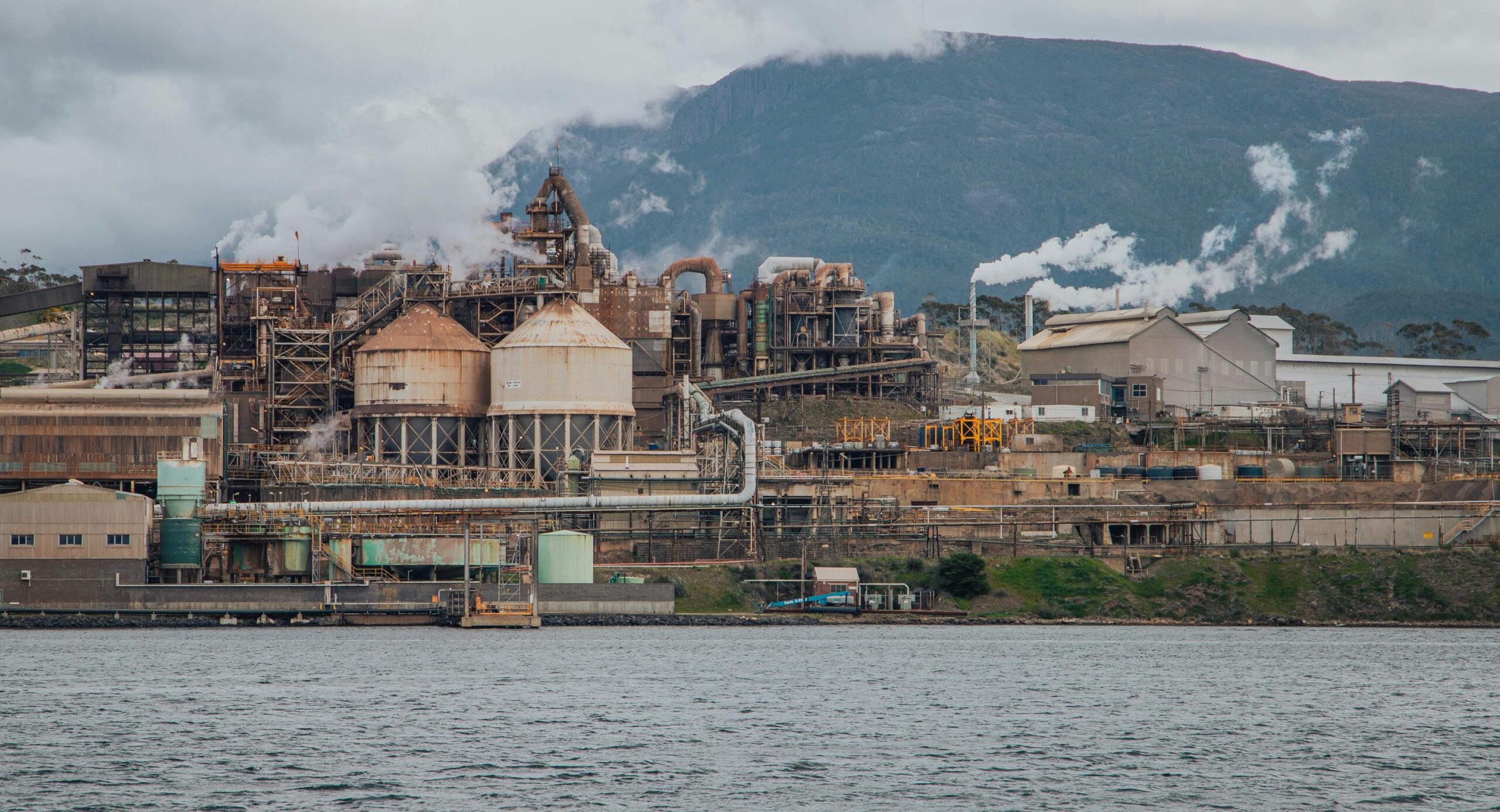
Public cost transfer analysis reveals hidden economic burdens that shape policy decisions and drive sustainability, transforming how governments allocate resources and plan for future generations.

🔍 Understanding the Fundamentals of Public Cost Transfer
At its core, public cost transfer represents the shifting of financial burdens from one group or entity to another within society. This phenomenon occurs constantly in modern economies, often invisibly, as governments make decisions about taxation, subsidies, regulations, and public services. Understanding these transfers is crucial for creating equitable and sustainable policies that don’t merely move problems from one area to another.
Public cost transfer analysis examines who pays for what in society, and more importantly, who benefits from these arrangements. When a government subsidizes fossil fuels, for instance, the immediate cost may be borne by taxpayers, but the long-term environmental costs are transferred to future generations. Similarly, when healthcare systems fail to invest in preventive care, the costs shift from early intervention programs to expensive emergency treatments later.
This type of analysis has become increasingly sophisticated with the advancement of data analytics and economic modeling tools. Policymakers can now trace the ripple effects of decisions across different sectors, demographics, and timeframes with unprecedented accuracy.
💡 The Hidden Mechanics: How Cost Transfers Actually Work
Cost transfers operate through several mechanisms that aren’t always obvious to the casual observer. Understanding these pathways is essential for effective policy design and evaluation.
Direct Fiscal Transfers
The most visible form involves direct government spending and taxation. When governments provide subsidies to specific industries, they’re transferring costs from private businesses to the general taxpaying population. Agricultural subsidies, energy subsidies, and corporate tax breaks all represent direct fiscal transfers that have profound implications for economic equity and efficiency.
Regulatory Cost Shifting
Regulations often transfer costs between different stakeholders. Environmental regulations, for example, may shift pollution costs from affected communities back to the companies creating the pollution. While this seems fair on the surface, the actual outcome depends on how companies respond—they might absorb costs, pass them to consumers through higher prices, or innovate to reduce both pollution and costs.
Temporal Cost Displacement
Perhaps the most insidious form of cost transfer involves shifting burdens across time. Deferred infrastructure maintenance, unsustainable pension promises, and environmental degradation all represent costs that today’s decision-makers impose on tomorrow’s citizens. This temporal dimension makes cost transfer analysis particularly relevant for sustainability planning.
🌍 Real-World Applications Transforming Policy Landscapes
The practical application of public cost transfer analysis has revolutionized policymaking in several key areas, demonstrating its value beyond theoretical frameworks.
Healthcare System Optimization
Healthcare systems worldwide have used cost transfer analysis to identify inefficiencies where costs simply move between stakeholders without improving outcomes. For instance, reducing emergency room visits through community health programs doesn’t just save money—it reveals how costs were previously transferred from preventive care budgets to emergency services, insurance companies, and ultimately patients through higher premiums.
Countries like Germany and the Netherlands have implemented comprehensive health impact assessments that include cost transfer analysis, leading to more integrated care models that reduce unnecessary cost shifting between primary care, specialist services, and hospitals.
Environmental Policy and Climate Action
Climate change represents perhaps the largest intergenerational cost transfer in human history. Current emissions create costs that will be paid by people not yet born. Sophisticated cost transfer analysis has helped quantify this burden, making the case for immediate action more compelling to policymakers.
Carbon pricing mechanisms like cap-and-trade systems and carbon taxes explicitly aim to reverse historical cost transfers by making polluters pay for environmental damage rather than externalizing these costs to society. The success of these policies depends heavily on accurate cost transfer analysis to set appropriate price signals.
Infrastructure Investment Decisions
Transportation infrastructure decisions illustrate cost transfers clearly. Building highways may seem cheaper than investing in public transit, but this analysis often ignores transferred costs: increased air pollution, traffic congestion, healthcare costs from sedentary lifestyles, and urban sprawl. Comprehensive cost transfer analysis reveals the true economic picture.
Cities like Copenhagen and Amsterdam have used this type of analysis to justify substantial investments in cycling infrastructure, demonstrating that upfront costs are offset by reduced healthcare expenditures, improved productivity, and lower environmental remediation needs.
📊 Methodologies Driving Analytical Precision
Effective public cost transfer analysis requires robust methodological frameworks that can capture complex economic relationships and trace costs across different domains and timeframes.
Life Cycle Cost Analysis
This approach examines total costs over the entire lifespan of a policy or project, including initial investment, ongoing operations, maintenance, and eventual decommissioning or replacement. By taking this long view, analysts can identify hidden cost transfers that occur when decision-makers focus solely on upfront expenses.
Social Cost-Benefit Analysis
Going beyond traditional economic analysis, social cost-benefit frameworks incorporate externalities—costs and benefits that affect parties not directly involved in transactions. This methodology is essential for capturing cost transfers that occur when market prices don’t reflect true social costs.
Distributional Impact Assessment
Understanding who bears costs and who receives benefits across different demographic groups is crucial for equity considerations. Distributional analysis reveals when policies inadvertently transfer costs from wealthy to poor populations, or vice versa, enabling policymakers to design compensatory measures.
🚀 Technology Amplifying Analytical Capabilities
Modern technology has dramatically enhanced the precision and scope of public cost transfer analysis, making it possible to model scenarios with unprecedented detail.
Machine learning algorithms can now process vast datasets to identify cost transfer patterns that would be impossible to detect manually. These systems can track how a policy change in one sector ripples through the economy, affecting employment, health outcomes, environmental conditions, and public finances simultaneously.
Geographic information systems (GIS) allow analysts to visualize cost transfers spatially, revealing how policies affect different communities and regions differently. This spatial dimension is particularly important for infrastructure, environmental, and urban planning decisions.
Blockchain technology is beginning to be applied to create transparent, auditable records of public expenditures, making it easier to trace cost flows and identify transfers that might otherwise remain hidden in complex bureaucratic systems.
⚖️ Equity Considerations and Social Justice Implications
Public cost transfer analysis has profound implications for social equity and justice. Many historical policy failures stem from transferring costs from privileged groups to vulnerable populations.
For example, industrial zoning decisions have often transferred pollution costs from wealthy neighborhoods to low-income communities and communities of color. Cost transfer analysis can make these injustices visible and quantifiable, creating stronger cases for corrective policies.
Regressive taxation systems represent another form of inequitable cost transfer, where lower-income households pay proportionally more to fund public services that may primarily benefit wealthier citizens. Progressive reformers use cost transfer analysis to advocate for more equitable tax structures.
Intergenerational equity represents a particularly challenging dimension. Current generations benefit from resource extraction, deficit spending, and environmental degradation while transferring costs to the future. Cost transfer analysis provides frameworks for quantifying these temporal injustices and designing policies that better balance present and future needs.
🌱 Building Sustainable Futures Through Informed Analysis
Sustainability fundamentally requires understanding and managing cost transfers across time, space, and populations. The United Nations Sustainable Development Goals implicitly recognize this by calling for policies that meet present needs without compromising future generations’ ability to meet theirs.
Circular Economy Transitions
The shift from linear “take-make-dispose” economic models to circular systems that minimize waste and maximize resource efficiency depends on properly pricing externalities. Cost transfer analysis reveals how linear models have historically transferred environmental and social costs away from producers and consumers, making unsustainable practices appear economically rational when they’re actually destructive.
Renewable Energy Transitions
The global transition to renewable energy illustrates cost transfer dynamics clearly. Fossil fuel subsidies represent a massive transfer from general taxpayers to energy companies and energy-intensive industries, while also transferring environmental and health costs to communities and future generations. Cost transfer analysis has been instrumental in building the case for eliminating these subsidies and redirecting support to clean energy.
Natural Capital Accounting
Emerging frameworks for natural capital accounting explicitly recognize environmental resources as economic assets whose degradation represents a real cost. This approach makes visible the cost transfers that occur when natural systems are damaged, forcing current economic actors to pay for environmental restoration rather than transferring these costs to the future.
🎯 Practical Steps for Implementation in Policy Processes
For public cost transfer analysis to actually shape better policies, it must be integrated into standard decision-making processes at all levels of government.
First, establishing mandatory cost transfer impact assessments for major policy proposals ensures this perspective is considered systematically rather than ad hoc. Several progressive jurisdictions have begun requiring such assessments alongside traditional fiscal and environmental impact statements.
Second, developing standardized methodologies and data collection protocols enables meaningful comparisons across different policies and jurisdictions. International organizations like the OECD have been working to create such standards, facilitating knowledge sharing and best practice development.
Third, building institutional capacity through training programs ensures that government analysts, policymakers, and civil society organizations have the skills needed to conduct and interpret cost transfer analysis. Universities and think tanks play crucial roles in developing this expertise.
Fourth, creating transparent reporting mechanisms allows citizens to understand how policies affect different groups and hold decision-makers accountable. Open data initiatives and accessible visualization tools democratize cost transfer analysis, moving it beyond technical experts to informed public discourse.
🔮 Emerging Trends Shaping the Future of Cost Analysis
The field of public cost transfer analysis continues evolving rapidly, with several exciting developments on the horizon that promise to enhance both analytical precision and policy relevance.
Integrated assessment models are becoming increasingly sophisticated, combining economic, environmental, and social dimensions in unified frameworks. These models can simulate complex feedback loops and cascading effects that simpler approaches miss, providing more accurate pictures of true costs and benefits.
Real-time monitoring systems using Internet of Things (IoT) sensors and big data analytics enable dynamic cost tracking rather than relying solely on retrospective analysis. This shift from backward-looking to forward-looking analysis helps policymakers adjust course more quickly when cost transfers prove problematic.
Participatory approaches are democratizing cost transfer analysis by involving affected communities directly in identifying and quantifying costs. This grassroots perspective often reveals transfers that top-down technical analysis overlooks, while also building public support for policy changes.
Behavioral economics insights are being incorporated to understand how cognitive biases affect both the creation of cost transfers and public perception of them. This psychological dimension helps explain why harmful cost transfers persist despite clear evidence of their negative impacts.
💼 Overcoming Implementation Challenges and Resistance
Despite its clear benefits, implementing comprehensive cost transfer analysis faces significant obstacles that must be acknowledged and addressed.
Political resistance often emerges from stakeholders who benefit from current arrangements where costs are hidden or externalized. Powerful industries that profit from subsidies or lax environmental regulations naturally resist analytical frameworks that make these transfers visible and quantifiable.
Methodological complexity can be daunting, requiring multidisciplinary expertise and sophisticated data systems. Smaller jurisdictions with limited analytical capacity may struggle to implement comprehensive frameworks without external support.
Short-term political horizons create misaligned incentives, as elected officials may prioritize immediate visible benefits over long-term cost implications that will materialize after they leave office. Addressing this requires institutional reforms that strengthen accountability across political cycles.
Data limitations remain significant in many contexts, particularly in developing countries where comprehensive economic and social statistics may be scarce. Building the necessary data infrastructure represents a substantial but worthwhile investment.

🌟 Catalyzing Transformation Through Collective Action
Ultimately, the power of public cost transfer analysis lies not in the technical sophistication of methodologies, but in its ability to illuminate hidden injustices and inefficiencies, catalyzing collective action for better policies.
When communities understand that they’re bearing costs that should be borne elsewhere, they mobilize for change. When policymakers see the full costs of seemingly cheap options, they make different choices. When future generations’ interests are quantified and made visible in present decision-making, sustainability becomes not just an aspiration but a practical priority.
The transition to smarter policies and sustainable futures requires this kind of clear-eyed analysis that reveals true costs rather than allowing them to be hidden, externalized, or transferred to those least able to bear them. Public cost transfer analysis provides the intellectual framework and practical tools to make this transformation possible.
As societies worldwide confront intersecting challenges—climate change, inequality, resource constraints, demographic shifts—the ability to understand and manage cost transfers becomes not merely useful but essential. The methodologies, technologies, and institutional practices discussed throughout this exploration represent more than academic exercises; they constitute the foundation for governance systems that can navigate complexity while maintaining equity and sustainability.
By embracing comprehensive cost transfer analysis and embedding it in standard policy processes, governments can move beyond reactive crisis management toward proactive, evidence-based decision-making that creates lasting value for all stakeholders across generations. The hidden impacts need not remain hidden, and the smarter, more sustainable futures we seek are within reach when we commit to understanding and acting on the full truth of how our choices distribute costs and benefits throughout society.